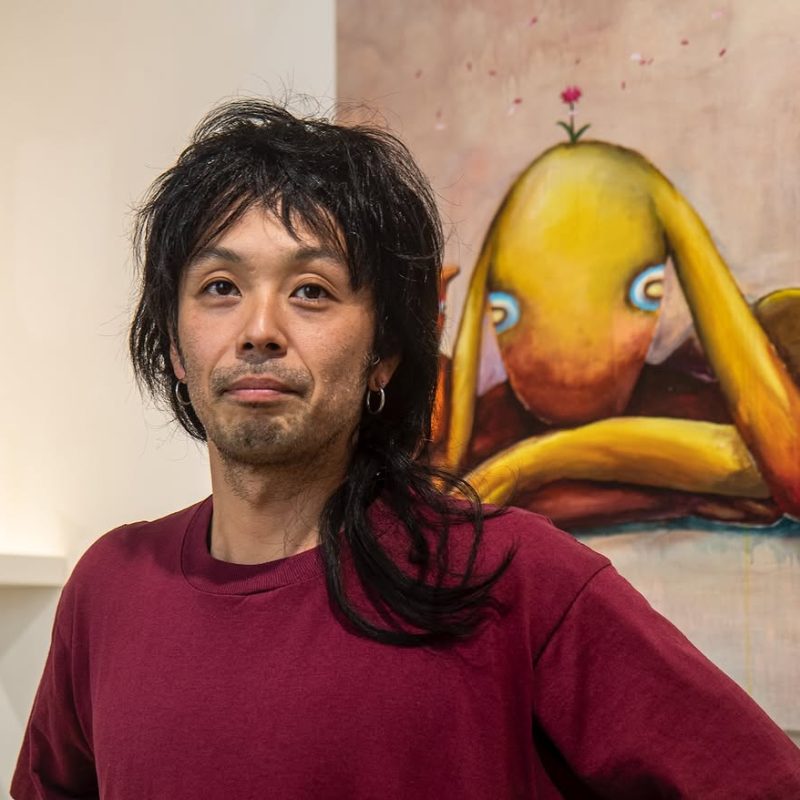
Daijiro Hama
JAPAN, 1984
Born in 1984 in Shimane Prefecture, in southern Japan, Daijiro Hama grew up in a region dense with shrines and ancient legends. Surrounded from childhood by stories of yōkai — the monsters of Japanese folklore — he began drawing as naturally as eating breakfast, a habit that never left him.
For years he imagined a different life: he dreamed of becoming an antique dealer and spent five years in Canada pursuing it. It was there, drawing in cafés between shifts, that he understood his urge to draw was more than a habit. He returned to Japan and settled in Kyoto, where he met an elderly sumi ink artist who took an interest in him. She taught him the technique — and, more importantly, introduced him to the philosophy of monochrome work. That encounter still shapes his practice today.
Now based in The Hague, in the Netherlands, his inner world takes shape. Monochrome. Black and white. More recently, with a touch of colour to underline a mood. The concept seems minimal, but look closer and a broader, deeper range of lines appears.
At the centre of his recent work stands a recurring figure he calls Puman — a self-portrait, but also, in his words, a mirror-like being reflecting the purity of human nature we all carry. Highly conceptual, his work nonetheless tells a story. Sometimes you can look it straight in the eye; at other times you have to call on your imagination. What is certain is that it provokes something. You only have to open yourself to it.